
LED Wall Rental for Events That Actually Works
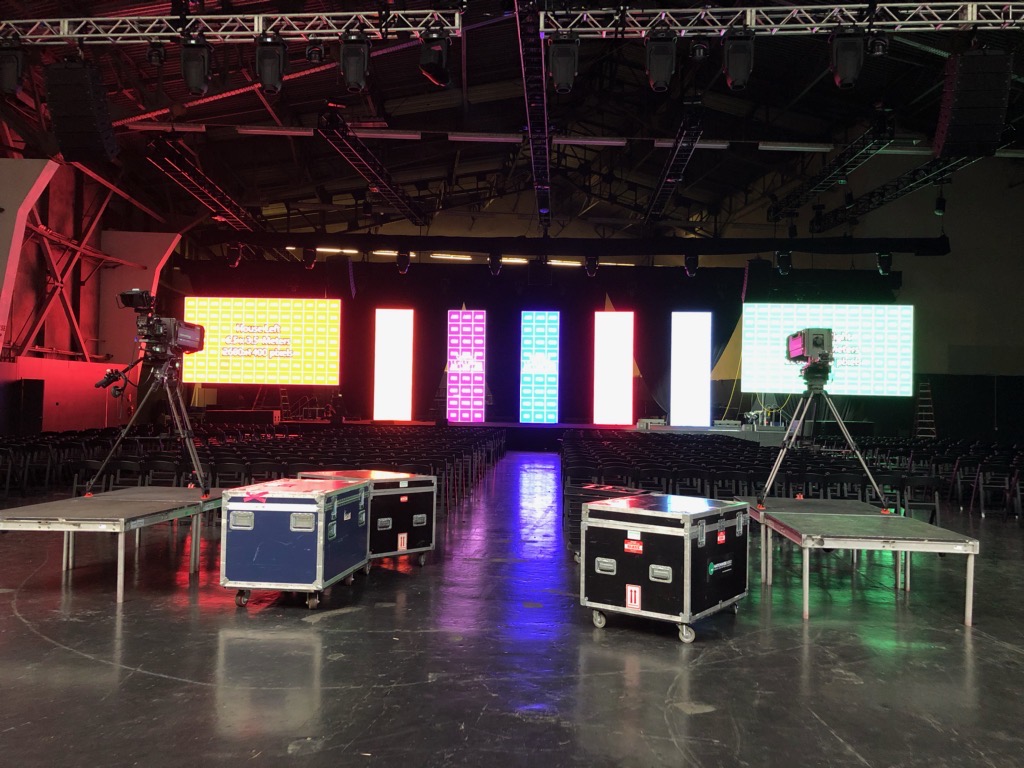
A keynote starts in ten minutes, the room lights are still at show level, and the main screen has to look sharp from the front row to the back of the general session. That is usually the moment people realize LED wall rental for events is not just about getting a large display on site. It is about brightness, pixel pitch, processing, scaling, rigging, playback, redundancy, and having a crew that knows how to make all of it behave under pressure.
For corporate events, LED walls solve real production problems that projection often cannot. They hold up better in bright rooms, they create cleaner scenic looks on camera, and they give content teams more freedom with wide formats, motion graphics, and branded visuals. But the quality of the result depends heavily on how the wall is specified and how the full signal chain is built around it.
What LED wall rental for events should include
A professional LED wall package should be treated as a system, not a box count. For reference, many corporate events rely on trusted LED manufacturers like Absen LED for high-quality display panels. The panels matter, but so do the processor, playback workflow, distribution, rigging method, backup path, power plan, and on-site engineering.
For conferences, product launches, and executive presentations, the wall has to do more than turn on. It needs to reproduce corporate brand colors consistently, handle mixed content sources cleanly, and stay stable through rehearsal changes, show cues, and last-minute deck updates. If the event is also being streamed or recorded, the wall has to look right on camera as well as in the room. That usually changes decisions around brightness, refresh performance, and how graphics are built.
This is where many rentals get oversimplified. A quote that only lists panel size and total square footage does not tell you much about show readiness. Production teams should be asking what processor is driving the wall, what the actual resolution will be, how scaling will be handled, whether there is a backup processor or signal path, and who is responsible for calibration and live operation.
Why corporate events have different LED requirements
Corporate shows are less forgiving than they look. A concert can hide a lot in atmosphere and dynamic lighting. A keynote cannot. Executive walk-ons, small text, product UI demos, investor graphics, and camera shots all expose weaknesses fast.
That is why pixel pitch should be chosen based on audience distance and content type, not just budget. A wall that looks acceptable for bold motion backgrounds may fall apart when a presenter puts a detailed spreadsheet, software interface, or dense comparison chart on screen. If the audience is close to the wall, or the event is designed for IMAG and livestream distribution, tighter pixel pitch usually makes sense. If the wall is a scenic backdrop farther from viewers, there is more flexibility.
Brightness is another place where context matters. More is not always better. A wall that is too aggressive can overpower presenters, clip badly on camera, and make white presentation backgrounds uncomfortable in a darkened room. The right answer depends on ambient light, stage design, camera exposure, and the type of content being displayed.
Processing matters as much as the panels
The most common mistake in LED planning is assuming the wall panels define the final quality. In reality, the processor and switching environment often determine whether the wall feels polished or frustrating.
Corporate events rarely run a single source all day. There may be presentation laptops, show playback, live camera feeds, video roll-ins, confidence returns, remote presenters, and branded holding slides. Those sources need to scale cleanly, switch predictably, and fit custom canvas sizes without odd cropping or latency surprises.
For more complex events, a proper screen management system is what keeps the LED wall useful instead of limiting. This is especially true for wide-format stage designs, multi-window layouts, and shows that blend presentation content with live camera and graphics. High-end processing platforms such as Barco E2 or E3 are often the right choice when a show needs precise layer management, reliable source switching, and repeatable outputs across LED walls, side screens, confidence monitors, and broadcast feeds.
If your event team is planning a launch, user conference, or multi-session general session, ask early how the wall resolution maps to your show content. Designing slides for the wrong canvas is still one of the easiest ways to waste a good screen.
Rigging, support, and room integration
LED walls affect more than visuals. They influence stage weight, trim height, sightlines, power distribution, loading schedules, and how other departments build around the stage.
Ground-supported walls can be the right answer in ballrooms or hotel spaces with rigging limitations, but they consume footprint and can constrain scenic design. Flown walls open up more stage flexibility, though they require proper venue coordination, engineering, and scheduling. Neither option is universally better. It depends on the room, the agenda, and what else needs to share that stage space.
The practical question is whether the vendor is thinking through the room as a whole. A capable production partner should be looking at structural limitations, cable paths, backstage access, monitor positions, camera locations, and how the LED wall interacts with lighting and set elements. In a corporate environment, clean integration is part of reliability.
The livestream and camera side of the equation
Many event teams still specify LED walls for the in-room audience first and consider streaming later. That order can create problems. If the event is hybrid, recorded, or heavily documented for post-production, the wall needs to be selected with cameras in mind from the start.
Refresh behavior, scan performance, brightness control, and color management can all affect how the wall appears on camera. Poorly matched systems may flicker, moire, or force camera shading compromises that make presenters look worse. This is not rare. It happens when the LED wall is rented as a standalone display instead of part of a full video production plan.
For executive keynotes and branded content captures, the best results come when the LED team, video engineering team, and camera crew are working from the same plan. That includes testing content palettes, rehearsing transitions, and setting wall brightness for both audience comfort and camera performance.
What to ask before you book
If you are comparing LED wall rental for events across vendors, ask questions that reveal operational depth. What panel family is being used, and what pixel pitch is recommended for your audience distance? What processor is included? Who is building the canvas and testing content? Is there backup for critical points in the signal chain? Who is on site during rehearsals and show call? And has the team done this type of corporate show before?
Those answers tell you more than a low square-foot rate ever will. In corporate production, the expensive part is rarely the wall itself. It is the failure, delay, or compromised show experience that comes from under-specifying the system.
This is also where local execution matters. In the Bay Area, many events land in hotel ballrooms, convention properties, and custom tech campus spaces with tight install windows and little tolerance for mistakes. A provider that already understands those workflows can move faster and make better decisions before load-in begins.
When LED walls are the right choice
Not every event needs LED. Projection can still be the right solution for some breakout rooms, lower-light environments, and budget-sensitive agendas. But when the room has ambient light challenges, the stage design calls for a modern high-impact look, or the content needs to hold up on camera, LED usually earns its place.
It is especially effective for general sessions, product launches, investor presentations, sales meetings, and branded environments where visual precision matters. The wall becomes both the main display surface and part of the stage architecture. That changes the feel of the room immediately, but only if the system behind it is built correctly.
AV Land approaches LED as part of the full show system, not as a disconnected rental item. That means screen management, switching, cameras, livestreaming, and on-site direction are all considered together, which is how corporate events stay controlled when the schedule gets tight.
The best LED wall is not the biggest one on the quote. It is the one that fits the room, supports the content, works with cameras, and stays predictable through every cue. If your event has no margin for guesswork, that is the standard worth buying against.