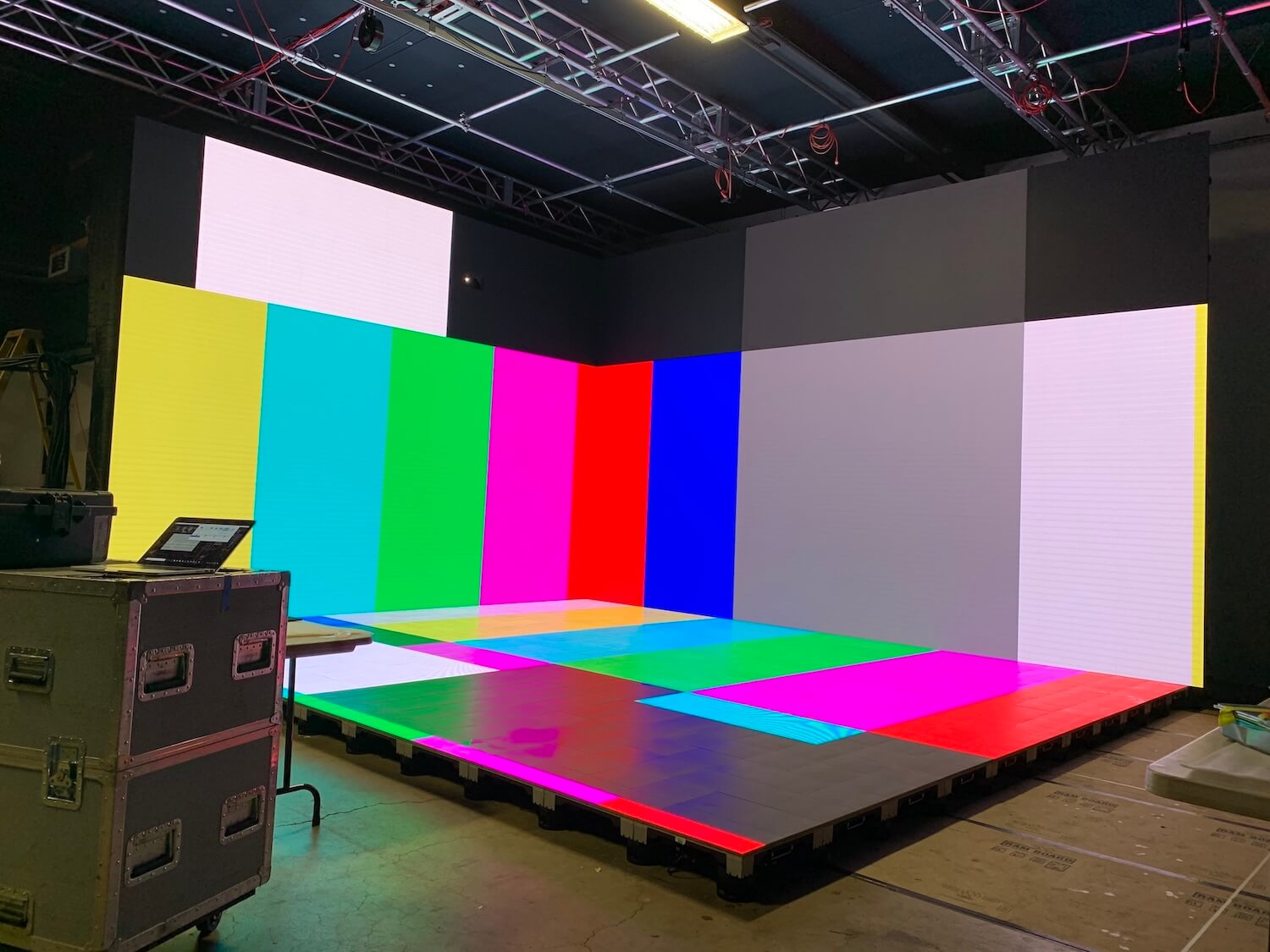
LED Wall Rental for Corporate Events
A keynote is running on time, the walk-in music is up, the content team has final slides, and then someone asks the question that should have been settled weeks earlier — can the screen actually handle this show? That is usually where LED wall rental for corporate events stops being a line item and starts becoming a production decision.
For corporate events, an LED wall is not just a larger display surface. It affects room layout, camera exposure, presenter comfort, playback workflow, graphics design, rigging, power distribution, and show control. If the wall is specified correctly, it becomes a dependable part of the production system. If it is underspecified or installed without enough planning, it creates problems everywhere else.
What LED Wall Rental for Corporate Events Really Includes
A professional LED wall package is more than tiles and ground support. It typically includes the panels themselves, processing, distribution, rigging or support, power, backup planning, signal management, labor, and show-site configuration. For corporate buyers, that matters because the wall has to work inside a larger ecosystem that may include presentation switching, multi-camera IMAG, livestream feeds, confidence monitors, and remote presenters.
The real cost driver is not only square footage. Pixel pitch, wall dimensions, brightness, trim height, content resolution, processor requirements, and load-in conditions all change the scope. A small executive stage with dense 1.9mm LED can cost more than a larger general-session wall built with a wider pitch, because the viewing distance and camera plan are different.
This is also why experienced event production teams treat LED walls as signal-flow infrastructure, not decor. If your event includes Barco screen management, camera feeds, lower thirds, holding slides, walk-in loops, and speaker support, the wall needs to behave predictably under show conditions.
Why Corporate Shows Choose LED Over Projection
Projection still has a place, especially in dark rooms with controlled sightlines. But LED walls solve several persistent problems in conference environments. Ambient light is less of an issue. Scenic integration is cleaner. Image punch is stronger for brand-heavy content, product visuals, and data-rich graphics. Camera capture also tends to be more consistent, which matters for hybrid events and recorded sessions.
That said, LED is not automatically the better choice. In some ballrooms, a large rear-projection setup may still be the right answer if budget, staging depth, and content type align. The point is not that LED replaces everything. The point is that LED is often the more stable platform when you need brightness, flexibility, and confidence under live-show conditions.
The Specifications That Actually Matter
Pixel Pitch and Viewing Distance
Pixel pitch gets most of the attention, and for good reason. It affects sharpness at close range and on camera. For a general session where the audience is seated farther back, a wider pitch may be perfectly acceptable. For an investor event, product launch, or executive presentation with front-row seating and tight camera shots, a finer pitch is usually worth the investment.
The mistake is choosing pitch in isolation. You have to match it to viewing distance, camera framing, and content style. Dense spreadsheets, UI demos, and typography-heavy slides expose weaknesses fast.
LED manufacturers such as Absen and ROE Visual offer different LED display products for rental, staging, broadcast, corporate, and commercial environments. The right panel choice depends on the room, audience distance, camera plan, and content design — not just the largest wall size available.
Processor Capability
The processor is where many cheap LED packages fall apart. If the wall is being fed multiple sources, scaled backgrounds, IMAG windows, or layered compositions, the processor has to support the canvas cleanly. That often means a professional screen management workflow, not a basic send box doing the minimum.
On higher-stakes shows, this is where systems such as Barco E2 or E3 become relevant. They allow the LED wall to function as part of a wider event architecture rather than a stand-alone display. Barco image processing systems are commonly used when shows require multiple sources, destinations, layers, and screen-control flexibility.
For LED control, platforms such as NovaStar are widely used in LED display workflows, including LED control systems and processors. The processor and control system need to match the wall size, resolution, refresh needs, camera requirements, and show-control plan.
Brightness and Color Control
Corporate rooms are rarely perfect black-box environments. General sessions often include stage wash, branded lighting, and open doors during load-in or transitions. The wall needs enough brightness to hold image integrity without becoming harsh for speakers or cameras.
Color calibration matters just as much. If the LED wall is too cool, too saturated, or inconsistent panel to panel, brand colors shift and skin tones suffer on camera. That is not a cosmetic issue. It affects the quality of the in-room experience and the livestream simultaneously.
Support Method, Weight, and Footprint
Ground-supported walls and flown walls create different staging realities. A flown wall can clean up the stage picture, but venue rigging points, weight limits, and labor windows have to support it. Ground support is often more practical, but it takes space and may affect scenic layout, backstage access, or first-row seating.
In hotel ballrooms and convention spaces, these constraints matter early. If the wall decision is delayed, the rest of the room plan often has to be rebuilt around it.
LED Wall Rental for Corporate Events: The Planning Issues That Get Missed
Most LED problems are not panel failures. They come from upstream decisions.
Content is a common one. A wall can only display what it is given. If presentation design is built for a standard 16:9 screen but the show wall is ultra-wide, someone has to decide whether to pillarbox, stretch backgrounds, create side graphics, or redesign the show package. That decision should happen before onsite rehearsals.
Power and cable routing are another issue. LED systems require disciplined distribution and clean pathways for data and power. In corporate venues with shared labor, compressed load-ins, and active exhibitors, cable management is part of risk management.
Then there is redundancy. Not every event needs full duplicate processing paths, but many corporate shows do need at least a realistic backup strategy. If the LED wall is carrying primary presentation content for a keynote, a single-point failure approach is difficult to justify.
Integrating LED Into a Full Corporate Production System
The best LED wall deployments are designed alongside video switching, graphics playback, camera coverage, and streaming — not after those systems are already built. If your event includes live camera magnification, remote guest feeds, walk-in content, session records, and overflow outputs, the wall should be one destination within a coordinated video system.
That is where a full-service corporate event production approach is more effective than renting display hardware by itself. The wall, processor, switcher, playback, routing, and operators need to work from the same show plan. For events with audience streaming or remote presenters, the livestream workflow has to be considered at the same time, not added once the room is already built.
For broader production support, AV Land provides corporate AV production services, livestreaming services, and video support for conferences, keynotes, and general sessions.
Industry groups such as AVIXA provide useful baseline resources on AV systems, display technologies, and professional standards, but practical event execution still comes down to crew experience and preparation under live conditions.
What Bay Area Clients Should Ask Before Booking
If you are evaluating LED wall rental for a conference, keynote, or product launch, ask how the vendor handles processing, content mapping, backup planning, and show operation. Ask who is responsible for scaling source content, coordinating with the graphics team, and managing onsite changes. Ask whether the same team that specs the wall will also operate the signal path during rehearsals and show call.
Those questions usually reveal the difference between a rental provider and a production partner. Corporate events move fast. Slides change late, walk-in loops get updated, speaker videos arrive in the wrong codec, and executives want confidence monitors repositioned after rehearsal. The wall has to stay stable while everything around it moves.
That is especially true in San Francisco, San Jose, and Silicon Valley venues where schedules are compressed and expectations are high. Technical capability is part of the purchase, but responsiveness onsite is often what protects the show.
When LED Is Worth the Premium
LED walls make the most sense when the screen is central to the event experience, when ambient light is difficult to control, when camera capture is important, or when scenic presentation needs more impact than projection can comfortably provide. They are also a strong fit when a show requires nonstandard aspect ratios, layered branding, or a polished product-launch look.
But not every session needs one. Breakouts, internal meetings, and lower-priority rooms may be better served with projection or large-format displays. Smart planning does not force LED into every room. It puts it where the audience, content, and camera plan justify it.
If the wall is carrying the keynote, anchoring the brand look, and feeding both the room and the stream, it should be treated as critical infrastructure from the first production call. That is usually the difference between a wall that simply turns on and a wall that actually supports the show when the room is full and the clock is running.
If you are budgeting an LED wall for an upcoming corporate event, start with the show requirements, not the panel size. Once the content, room, cameras, and control workflow are defined, the right wall tends to become obvious.
AV Land LED Wall and Corporate Event Support
AV Land supports LED wall rental and corporate event production across the Bay Area, including San Francisco, San Jose, Santa Clara, Mountain View, Palo Alto, Sunnyvale, Oakland, and surrounding cities. Our team can help with LED wall planning, video switching, screen management, camera integration, livestreaming, technical direction, and show-day operation.
For corporate events, the goal is not only to build a bright screen. The goal is to create a display system that supports the content, the presenters, the camera plan, and the live audience experience.
Need an LED Wall for a Corporate Event?
AV Land provides LED wall support, corporate AV production, video switching, screen management, livestreaming, and technical direction for Bay Area events.
Contact AV Land to discuss your next conference, keynote, product launch, or general session.
Phone: 415-799-1315
Email: info@av.land
Frequently Asked Questions
What is included in LED wall rental for corporate events?
LED wall rental may include LED panels, processing, power distribution, rigging or ground support, signal routing, labor, setup, testing, and show operation depending on the event requirements.
Is an LED wall better than projection for corporate events?
An LED wall can be better when the event needs brightness, strong camera capture, scenic integration, or a polished keynote look. Projection may still be a good option for darker rooms, controlled sightlines, or lower-budget breakout spaces.
What pixel pitch should I use for a corporate LED wall?
The right pixel pitch depends on viewing distance, camera framing, content detail, and budget. Closer viewing distances and camera-heavy events usually need a finer pixel pitch.
Can AV Land support LED walls with livestreaming?
Yes. AV Land can support LED wall workflows alongside livestreaming, video switching, camera coverage, recording, and technical direction for corporate events.
Does AV Land provide LED wall support throughout the Bay Area?
Yes. AV Land supports corporate events across the Bay Area, including San Francisco, San Jose, Santa Clara, Mountain View, Palo Alto, Sunnyvale, Oakland, and nearby cities.