
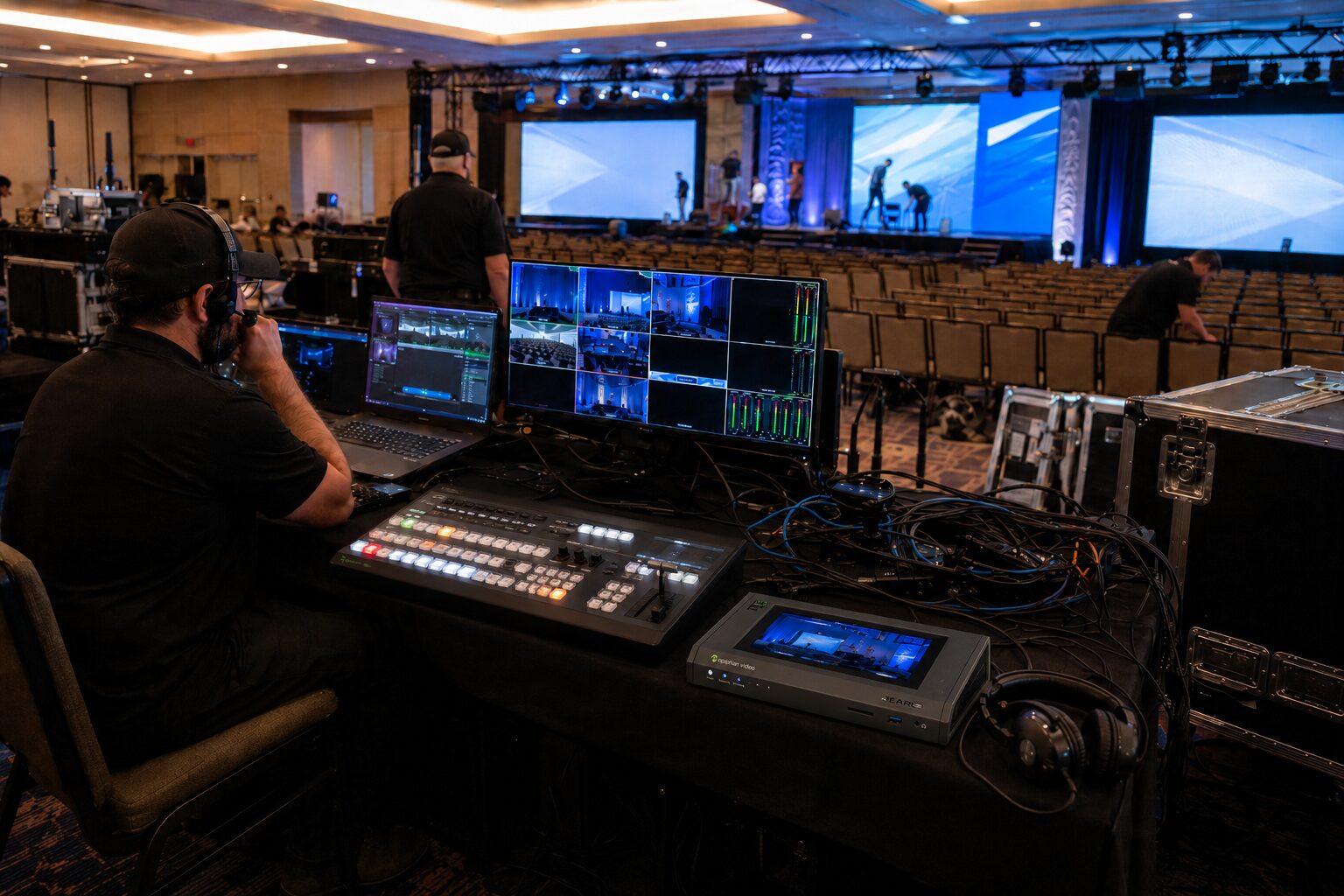
livestreaming for corporate events Pearl Mini or LiveU
A keynote is about to start, the room is full, remote attendees are waiting, and the venue internet has already dipped twice during rehearsal. That is exactly where professional livestreaming for corporate events with Pearl Mini and LiveU earns its place. This is not about adding a camera and clicking Go Live. It is about building a stream path that can tolerate real-world venue conditions, preserve production control, and keep executive content online when there is no room for failure.
For corporate events, the pairing makes sense because each unit solves a different problem. Pearl Mini handles encoding, switching, and recording at the production edge. LiveU handles transmission resilience when hardline internet is limited, shared, or simply not trustworthy enough for a show-critical feed. Used together, they create a practical path for hybrid events, executive webcasts, product launches, and conference sessions where stream stability matters as much as image quality.
Why Pearl Mini and LiveU Work Well Together
Pearl Mini is useful in corporate production because it can sit close to the show flow. You can take in program video, presentation feeds, and audio, manage stream output, and create local recordings without adding unnecessary complexity. In smaller rooms, it can cover multiple jobs in one chassis. In larger productions, it can serve as a dedicated encoder and recorder downstream from the main switcher.
LiveU addresses a different layer of risk. Instead of relying on a single venue circuit, it bonds multiple connections, typically across cellular and available data paths, to maintain a more stable upstream contribution. That matters in hotel ballrooms, convention centers, temporary event spaces, and outdoor activations where the posted bandwidth number rarely tells the whole story. A speed test at 7:00 a.m. does not guarantee what will happen when attendee devices flood the network at 9:15.
This combination is especially effective when the event has one of three common constraints. First, the client needs broadcast-style reliability but the venue internet package is inconsistent or overpriced for what it delivers. Second, the show requires local ISO or program recording even if the stream platform has an issue. Third, the production team needs a compact footprint without sacrificing control.
Professional Livestreaming for Corporate Events with Pearl Mini and LiveU in Real Workflows
In practice, there is no single correct signal flow. It depends on the scale of the room, the number of sources, the stream destination, and how much redundancy the client expects. But the most reliable corporate workflows are usually designed around role separation.
A typical setup starts with a dedicated video switcher handling cameras, playback, and presentation integration. That switched program feed goes to Pearl Mini for encoding and recording. Audio arrives as a properly mixed broadcast feed, not a room mix, with level management built for remote listeners. From Pearl Mini, the encoded stream is sent through LiveU when the transmission path needs bonded reliability rather than a single wired upload.
That distinction matters. If the encoder is stable but the network path is weak, your problem is not the encoder. If the network path is fine but your audio feed is distorted or your graphics path is late, better bandwidth will not fix that. Good livestreaming design starts by identifying the actual failure points, then assigning the right hardware to each one.
For executive webcasts, many teams also want a confidence return, local archive recording, and a backup version of the show. Pearl Mini is valuable there because it can maintain a high-quality local record even if the platform side has a problem. LiveU adds protection on the outbound leg, especially for events where a second hardline is unavailable or the venue cannot guarantee uncontended bandwidth.
Where the Trade-Offs Are
There is a tendency in event tech to treat gear combinations as universal answers. They are not. Pearl Mini and LiveU are strong tools, but they are still tools.
Pearl Mini is not a replacement for a full production switcher in a multi-camera keynote with complex playback, timed graphics, and presenter support. It can be part of that system, but it should not be expected to carry jobs outside its best use case. Likewise, LiveU is excellent for transmission resilience, but bonded cellular performance still depends on carrier conditions, RF environment, and local congestion. It reduces risk. It does not remove the need for testing.
This is why corporate livestreaming should be engineered around contingencies rather than marketing claims. If the event is investor-facing, internal executive communications, or a public product announcement, the right question is not, “Can this stream work?” The right question is, “What happens when one path degrades, one source changes late, or one feed fails five minutes before doors?”
Technical Planning That Actually Protects the Show
The strongest livestreams are usually won before load-in. That means confirming camera count, graphics sources, confidence monitoring, audio routing, stream destinations, recording requirements, and failover options before the first cable run. It also means treating the internet conversation with skepticism until there is proof.
Venue bandwidth should be verified with more than a basic sales sheet. Ask whether the circuit is dedicated, whether VLANs are available, whether ports are restricted, and whether other events are sharing the same uplink. If the answer is vague, that is often the answer.
A solid production plan for Pearl Mini and LiveU also includes bitrate decisions based on platform requirements and realistic network conditions. Running a bitrate too high for the available uplink creates avoidable instability. Running it too low protects the stream but can compromise image quality for slide-heavy content. Corporate shows often include dense keynote graphics, small text, product UI demos, and lower-third overlays. Those details need to remain legible for remote viewers, not just acceptable on a mobile phone.
Monitoring is another area where experienced crews make a difference. It is not enough to see that the encoder says live. You want confidence in audio meters, stream health, destination confirmation, return monitoring when possible, and a clear handoff between video, audio, and streaming operators. Most livestream failures are not caused by one dramatic hardware collapse. They come from small issues that nobody catches early enough.
When This Setup Makes the Most Sense
Professional livestreaming for corporate events with Pearl Mini and LiveU is a strong fit for mid-size to large corporate productions that need dependable streaming without overbuilding the rack. It works well for general sessions, executive town halls, breakout broadcasts, press-facing announcements, and hybrid conferences where on-site and remote audiences both matter.
It is also a good match when the event footprint changes quickly. Bay Area conference schedules are notorious for room turns, revised agendas, and last-minute presenter updates. A compact encoding and transmission package is easier to redeploy than a more cumbersome stack, provided the overall show design is still handled correctly.
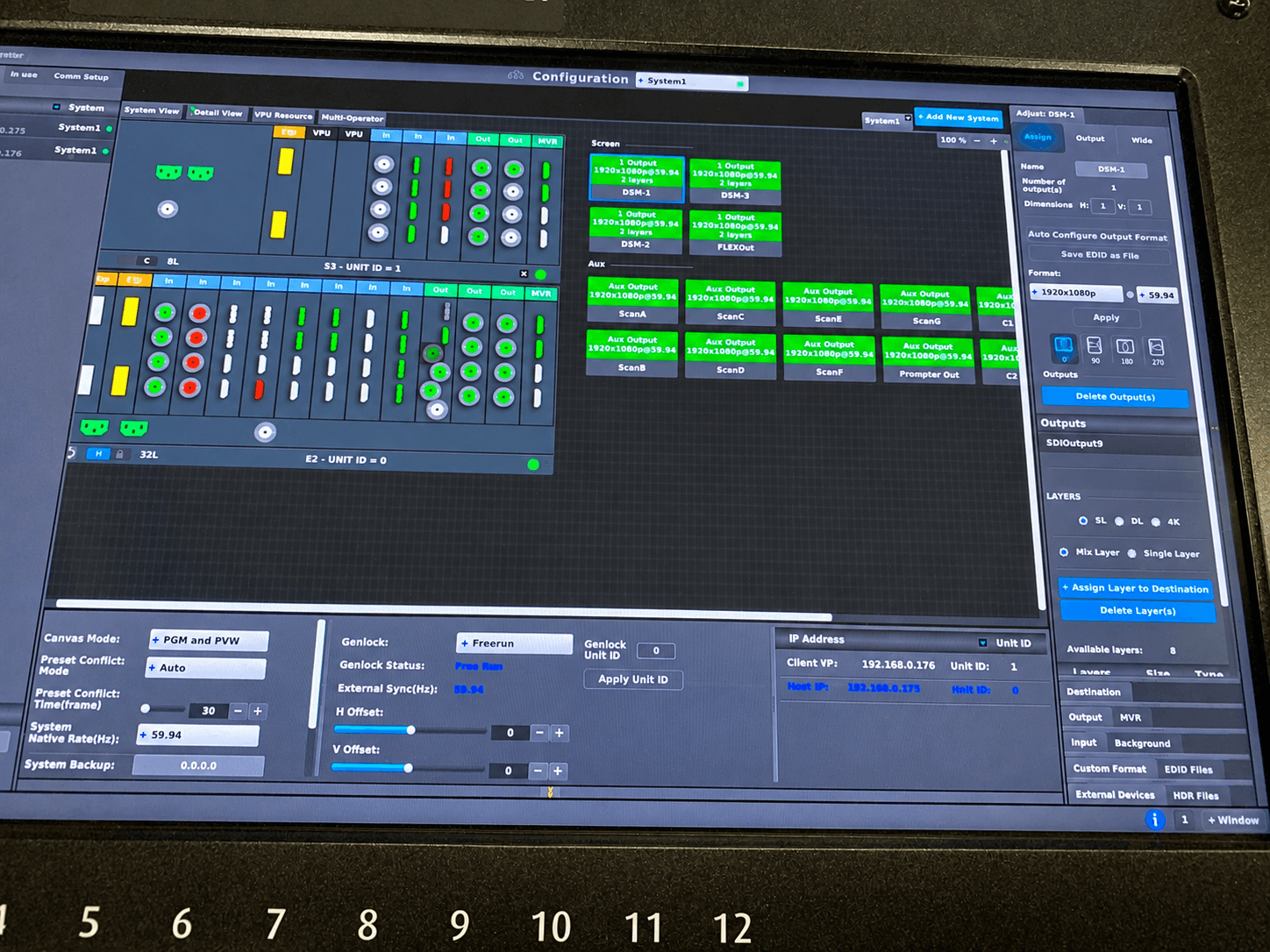
For larger shows with LED walls, multiple screen destinations, and complex presentation management, this setup is usually one part of a broader system. In those cases, video processing, switching, playback, and livestreaming should be treated as separate but coordinated layers. If your event includes major scenic displays or multi-format screen management, a full-service production team matters more than any single box in the chain. AV Land handles that kind of integrated workflow through its corporate AV production services and dedicated livestream services.
Platform and Destination Considerations
The stream path does not end at the encoder. Zoom Webinars, Microsoft Teams, custom RTMP destinations, and managed webcast platforms all impose different constraints. Some prioritize ease of access over broadcast-grade control. Others support stronger event branding and audience management but require tighter pre-show validation.
That affects how Pearl Mini and LiveU should be configured. A keynote sent to a managed webcast destination may justify one set of bitrate and redundancy choices. A panel discussion sent into a meeting platform may require different audio handling, latency expectations, and operator roles. If remote presenters are joining, the complexity jumps again because return audio, mix-minus, and confidence routing become critical.
For reference, Epiphan outlines Pearl Mini capabilities on its product pages, and LiveU details bonded transmission workflows in its technical documentation. Those manufacturer resources are useful, but they do not replace show-specific engineering.
What Experienced Corporate Crews Do Differently
The hardware matters, but the discipline around it matters more. Experienced corporate crews build streaming systems that assume the venue sheet is incomplete, the agenda will shift, and the final presenter laptop may appear ten minutes before walk-in. They plan signal flow with labels that make sense under pressure. They keep recordings independent from platform archives. They separate house audio needs from stream audio needs. And they build backup options that are realistic, not theoretical.
That is the difference between a setup that looks good on paper and one that holds up during a live keynote. In San Francisco, San Jose, and across Silicon Valley, corporate productions often run in spaces with tight schedules, shared infrastructure, and high visibility. Reliability comes from preparation, testing, and operators who understand what each device is doing in the chain.
If you are planning a webcast, hybrid meeting, or keynote stream, the real goal is not just getting online. It is staying online with clean audio, stable video, and a signal path that still makes sense when the room gets busy.
AV Land Livestreaming Support
AV Land supports professional livestreaming for corporate events across the Bay Area, including executive webcasts, hybrid meetings, conference sessions, product announcements, town halls, and multi-camera livestreams. Our livestream workflows can include camera support, video switching, audio integration, Pearl Mini encoding and recording, LiveU transmission support, local backup records, platform coordination, and show-day monitoring.
For corporate teams, the goal is not only to send a feed to the internet. The goal is to design a stream path that supports the message, protects the schedule, and gives remote attendees a stable experience.
Need Professional Livestreaming for a Corporate Event?
AV Land provides livestreaming, hybrid event support, conference video production, recording, and technical direction for Bay Area corporate events.
Contact AV Land to discuss your next livestream or hybrid event.
Phone: 415-799-1315
Email: info@av.land
Frequently Asked Questions
Why use Pearl Mini for corporate livestreaming?
Pearl Mini can support encoding, switching, and local recording in a compact workflow. It is useful for corporate livestreams where the production team needs a reliable hardware-based stream and record path.
Why use LiveU for event livestreaming?
LiveU helps reduce transmission risk by using bonded connections instead of relying only on a single venue internet path. This can be helpful in hotels, convention centers, temporary venues, and locations where internet reliability is uncertain.
Can Pearl Mini and LiveU replace a full production switcher?
Not always. For larger multi-camera corporate shows, Pearl Mini and LiveU are often part of the livestreaming and transmission workflow, while a dedicated video switcher handles cameras, playback, graphics, and show control.
Can AV Land support Zoom or Teams hybrid events?
Yes. AV Land can support hybrid event workflows involving Zoom, Microsoft Teams, managed webcast platforms, custom RTMP destinations, and conference livestream setups.
Does AV Land provide livestreaming outside the Bay Area?
AV Land primarily serves corporate events in the Bay Area, including San Francisco, San Jose, Santa Clara, Mountain View, Palo Alto, Sunnyvale, Oakland, and nearby cities.